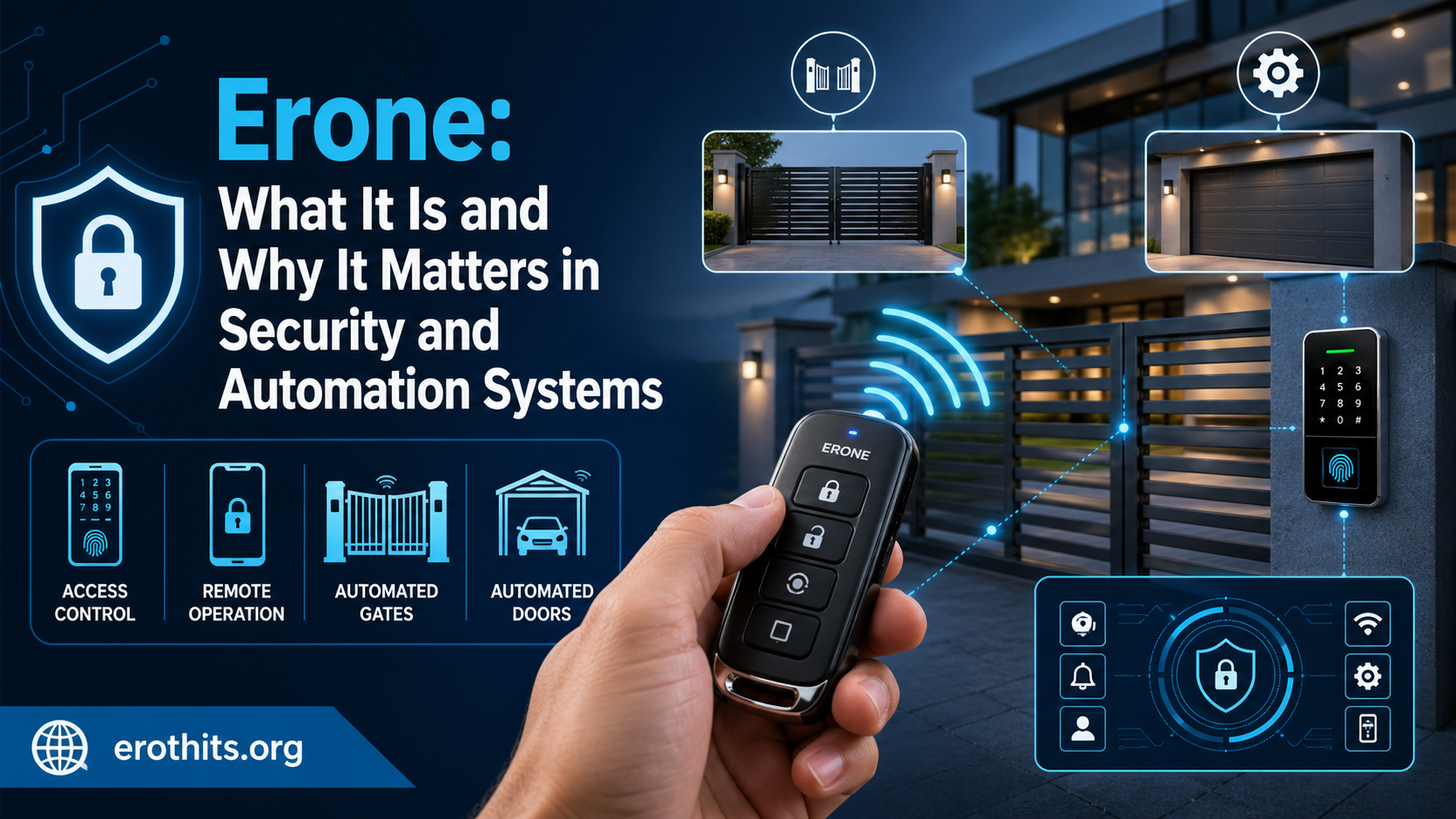
Erone: What It Is and Why It Matters in Security and Automation Systems
Modern security and automation systems are rapidly evolving, and wireless technology has become a core part of this transformation Erone. In homes, businesses, and industrial environments, access control solutions are now expected to be fast, reliable, and easy to manage. Wireless communication devices have replaced many traditional wired systems due to their flexibility and improved installation efficiency. This shift has also improved user experience and system scalability across multiple industries.
One of the most discussed technologies in this space is a wireless access control solution widely used in gate automation, door entry systems, and security infrastructure. It is designed to provide seamless communication between remote transmitters and receivers, allowing users to control access points with ease. This article explores its structure, working principles, features, and real-world applications in detail to help readers understand its importance in modern automation systems.
What Is Erone
The term refers to a wireless access control system developed for secure communication between remote devices and automation receivers. It is commonly associated with professional-grade security solutions used in residential gates, commercial buildings, and industrial entry points. The system is designed to simplify access control while maintaining strong reliability and signal stability across different environments.
This technology is part of a broader category of wireless automation tools that eliminate the need for physical wiring between control devices. Instead, it relies on radio frequency communication to transmit signals securely. It is widely used in environments where convenience, safety, and controlled access are essential, making it a key component in modern security infrastructure.
How Wireless Systems Work in Access Control
Wireless access control systems operate using radio frequency signals transmitted between a handheld device and a receiver unit. When a user activates a remote control, it sends a coded signal to the receiver installed at a gate, door, or barrier. The receiver then verifies the signal and performs the required action, such as opening or closing an entry point.
These systems are designed with secure encoding methods to prevent unauthorized access or signal duplication. The communication process is typically fast and efficient, allowing immediate response once the correct signal is detected. Depending on system design, the range can vary, but most installations provide sufficient coverage for residential and commercial use without signal loss under normal conditions.
Key Features of Wireless Access Technology
Wireless access systems are known for their convenience and advanced functionality. One of the most important features is remote operation, which allows users to control access points from a distance without physical interaction. This improves usability in environments such as parking areas, gated communities, and industrial facilities where quick access is required.
Another important feature is system compatibility with various automation devices. These systems can be integrated with gates, doors, alarms, and smart entry mechanisms. Additionally, they are designed for durability, ensuring consistent performance even in outdoor environments where weather conditions may vary. Security is also a major focus, with encrypted communication protecting against unauthorized signal interference.
Applications in Real Life Environments
Wireless access control technology is widely used in residential properties where automated gate systems are installed. Homeowners can easily open and close gates without leaving their vehicles, improving convenience and safety. This application is especially useful in urban areas where security and controlled entry are high priorities.
In commercial and industrial settings, these systems are used to manage restricted access zones. Warehouses, office buildings, and manufacturing facilities rely on controlled entry points to protect assets and maintain security protocols. Parking management systems also benefit from wireless access solutions, allowing smooth entry and exit for authorized vehicles while reducing manual supervision requirements.
Benefits of Wireless Access Systems
One of the primary advantages of wireless access systems is improved convenience. Users can operate entry points quickly and efficiently without needing physical keys or manual switches. This reduces time delays and enhances the overall user experience in both residential and commercial environments.
Another key benefit is installation flexibility. Since there is no need for extensive wiring, these systems can be deployed in a wide range of locations with minimal infrastructure changes. They also offer scalability, allowing additional devices to be added easily as system requirements grow. This makes them suitable for both small properties and large-scale industrial setups.
Limitations and Considerations
Despite their advantages, wireless access systems also have certain limitations. One common issue is signal interference, which can occur in environments with strong electromagnetic activity or physical obstacles. While modern systems are designed to reduce this risk, it can still affect performance in rare cases.
Another consideration is dependency on battery-powered devices. Remote transmitters require periodic battery replacement to ensure consistent functionality. Additionally, compatibility with older automation systems may be limited, requiring upgrades or adapters for proper integration. Proper installation and maintenance are also essential to ensure long-term reliability and performance.
Comparison With Other Wireless Security Systems
Wireless access control solutions compete with a variety of similar technologies in the security industry. While many systems offer similar functionality, differences often lie in signal stability, range, and build quality. Some alternatives may provide lower cost options, but they may lack advanced security features or long-term durability.
In comparison, professional-grade systems are often preferred for their reliability and consistent performance in demanding environments. They are designed to handle frequent usage and maintain secure communication even in challenging conditions. This makes them a preferred choice for security professionals and facility managers who prioritize dependability over cost savings.
Future of Wireless Automation
The future of wireless automation is closely connected to advancements in smart technology and the Internet of Things. Modern access control systems are increasingly being integrated with smart home platforms, allowing users to manage entry points through mobile applications and cloud-based systems. This trend is expected to grow significantly in the coming years.
Another major development area is enhanced security encryption and AI-based access control. Future systems may include intelligent authentication methods such as biometric recognition and behavioral analysis. These improvements will further strengthen security while making access control systems more intuitive and user-friendly across different industries.
Conclusion
Wireless access control technology plays a crucial role in modern security and automation systems. It provides a balance of convenience, security, and efficiency that makes it suitable for a wide range of applications. From residential gates to industrial facilities, these systems continue to improve how access is managed and controlled in everyday environments.
As technology continues to evolve, wireless automation solutions will become even more advanced and integrated into smart ecosystems. Their ability to simplify access management while maintaining strong security standards ensures they will remain an essential part of modern infrastructure for years to come.
FAQ
What is a wireless access control system used for
It is used to manage and control entry points such as gates, doors, and barriers using remote communication technology, improving convenience and security in various environments.
How does wireless access technology work
It works by sending radio frequency signals from a remote device to a receiver unit, which then performs actions like opening or closing access points after verifying the signal.
Is wireless access control secure
Yes, most systems use encrypted communication methods to prevent unauthorized access and ensure safe operation in residential, commercial, and industrial environments.
Can these systems be used in homes
Yes, they are commonly used in residential properties for automated gates and garage doors, allowing easy and secure entry for homeowners.
Do wireless systems require internet connection
No, most systems operate using radio frequency communication and do not require internet access to function properly.
What are the main advantages of wireless automation systems
They offer convenience, easy installation, scalability, and reliable remote operation without the need for complex wiring infrastructure.
What are common issues with wireless access systems
Possible issues include signal interference, battery replacement needs, and compatibility limitations with older systems.
Will wireless access control systems improve in the future
Yes, future systems are expected to include smarter integration, improved encryption, and advanced automation features driven by IoT and AI technologies.