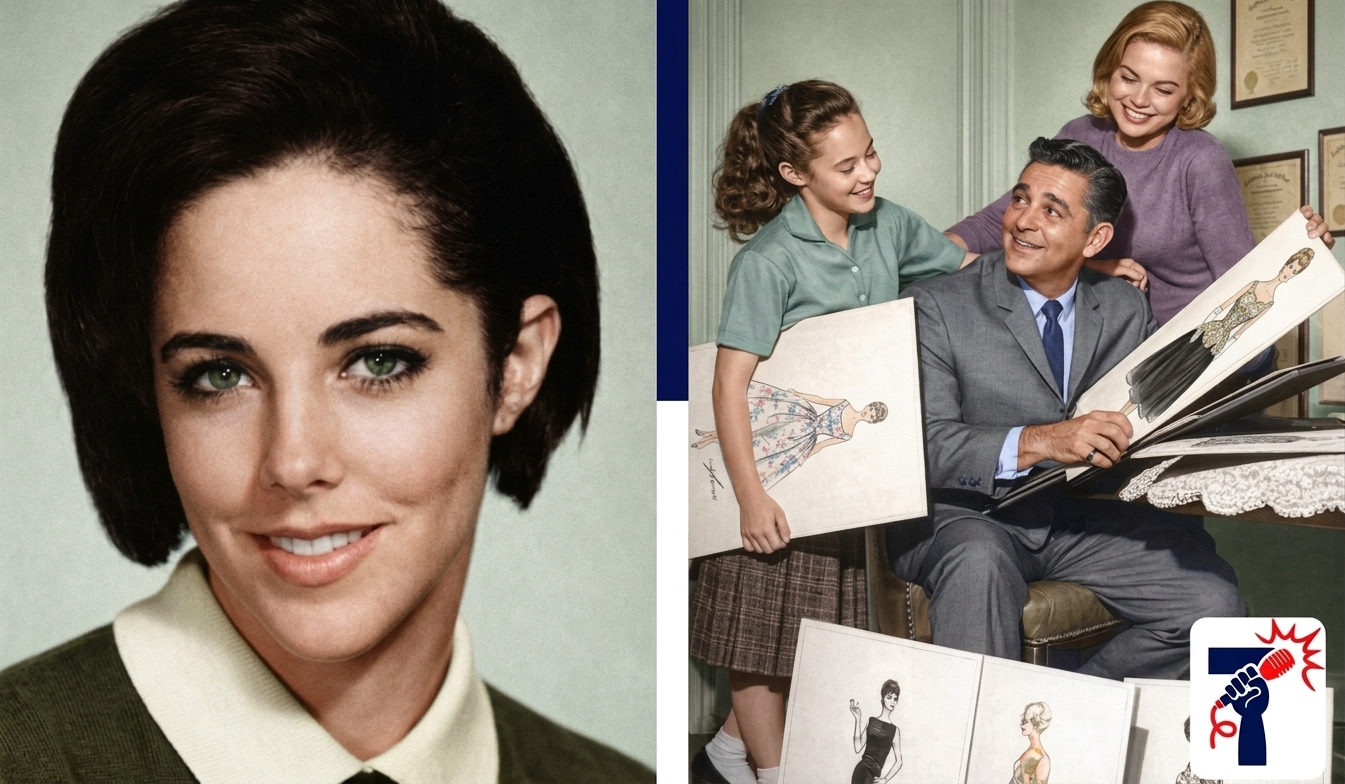
Nia Novella Travilla: Dona Drake’s Daughter, Parents, Life and Death
Nia Novella Travilla remains a name that appears quietly but meaningfully in searches about classic Hollywood, especially because of her connection to two memorable figures from the entertainment world. She was the daughter of actress, singer, and dancer Dona Drake and celebrated costume designer William Travilla. Her story is not one of constant publicity, red carpets, or film credits, but of a private life connected to a very public family legacy.
Interest in her life often comes from people researching Dona Drake’s background, William Travilla’s Hollywood career, or the personal histories behind famous entertainment families. While her parents were linked to film, fashion, and celebrity culture, Nia’s own life was far more private. That contrast makes her story compelling, because it shows how not every person born close to fame chooses to live inside it.
Who Was Nia Novella Travilla?
Nia Novella Travilla was the only daughter of Dona Drake and William Travilla. Public records and memorial sources identify her as being born in Los Angeles on August 16, 1951, and passing away on October 1, 2002, at the age of 51. She is mainly remembered because of her connection to her parents, both of whom had strong links to Hollywood’s golden era.
Although many online searches describe her as “Dona Drake’s daughter,” that phrase only tells part of the story. She belonged to a family shaped by acting, music, costume design, and old Hollywood culture. However, unlike many celebrity children who enter entertainment, Nia appears to have chosen a quieter route. This makes her biography different from the typical Hollywood-family story.
Early Life and Birth in Los Angeles
Nia Novella Travilla was born in Los Angeles, California, a city deeply associated with film studios, celebrity families, and creative careers. Her birth in 1951 placed her childhood during a changing period in American entertainment. Classic studio power was still strong, television was becoming more important, and Hollywood families often lived between public glamour and private complexity.
Being born to Dona Drake and William Travilla meant Nia’s family background was connected to performance and design from the beginning. Her mother had worked as a screen actress and performer, while her father became known for creating some of Hollywood’s most memorable costumes. Even if Nia did not pursue the same type of public life, her early environment was surrounded by artistic history.
Nia Novella Travilla’s Parents
The two most important names in Nia Novella Travilla public biography are Dona Drake and William Travilla. Dona Drake was known as an actress, singer, and dancer who worked in film during the 1930s and 1940s. William Travilla, often professionally known simply as Travilla, became a famous costume designer for film, theatre, and television.
Their marriage gave Nia a family identity connected to two different forms of Hollywood creativity. Her mother represented performance, screen presence, and musical talent, while her father represented design, visual style, and cinematic glamour. Together, they created a family story that continues to attract readers interested in old Hollywood biographies, costume history, and celebrity family connections.
Dona Drake: Nia’s Mother
Dona Drake was born Eunice Westmoreland and became known in entertainment through several stage names, including Rita Rio and Dona Drake. She worked as a singer, dancer, bandleader, and actress, appearing in films during a period when Hollywood often placed performers into narrow ethnic roles. Nia Novella Travilla Her career shows both her talent and the complicated realities of identity in old Hollywood.
As Nia’s mother, Dona Drake adds a powerful layer to the family story. She was not merely an actress with a list of screen credits; she was a performer whose public image was shaped by the entertainment industry’s expectations. Her life continues to interest film historians because it touches on performance, race, identity, and the way studios promoted stars during that era.
William Travilla: Nia’s Father
William Travilla was one of Hollywood’s respected costume designers. He was born in 1920 and became especially famous for designing costumes for Marilyn Monroe in several films. Nia Novella Travilla His work became part of cinema history because costumes often define how audiences remember stars, scenes, and entire films. Travilla’s designs contributed to the visual language of classic Hollywood glamour.
As Nia’s father, Travilla gave her a surname associated with fashion, film, and design excellence. His career extended beyond one celebrity or one film, but his connection to Marilyn Monroe remains one of the most searched aspects of his legacy. For readers discovering Nia through William Travilla, her story becomes part of a broader history of Hollywood style.
Her Parents’ Marriage and Family Life
Dona Drake and William Travilla married on August 19, 1944. Their daughter Nia was born in August 1951, almost seven years after their wedding. Sources about both Dona Drake and William Travilla note that Nia was their only child, which makes her an important figure in the family line connected to both Hollywood personalities.
The couple later separated, but public sources state that they remained legally married until Dona Drake’s death in 1989. This detail is important because it shows the difference between legal marriage, personal separation, and family connection. Nia’s childhood and adult life existed within this complicated but historically interesting Hollywood family structure.
Family Background and Hollywood Connections
Nia Novella Travilla family background is interesting because it combines several layers of American entertainment history. Through her mother, she was connected to acting, singing, dancing, and the challenges faced by performers who had to navigate identity in a restrictive industry. Through her father, she was connected to costume design, celebrity styling, and the creation of iconic film images.
This background helps explain why searches for Nia often include related names such as Dona Drake, William Travilla, Marilyn Monroe, and old Hollywood. Even though Nia did not become a public celebrity in the same way, her family name carries historical weight. Her life reminds readers that behind every famous Hollywood figure, there are family members whose stories are often less visible.
Was Nia Novella Travilla an Actress?
There is no strong public evidence that Nia followed Dona Drake into a major acting career. Most available sources identify her through her family background rather than through film credits, television appearances, or public performances. This is one reason her biography should be written carefully, without exaggerating her entertainment career or presenting uncertain claims as proven facts.
Many children of actors and designers choose not to work in the same industry as their parents. Some prefer professional fields outside Hollywood, while others choose privacy. Nia appears to belong to that category. Her importance in search results comes less from public celebrity and more from her connection to a family with lasting Hollywood significance.
Career and Private Life
One memorial source describes Nia as having become a noted local veterinarian before her death. This detail is often repeated in online summaries, but writers should treat it respectfully and avoid turning limited information into unsupported storytelling. If included, it should be presented as part of publicly available memorial information rather than expanded into claims that cannot be verified.
Her private life is one of the reasons readers continue searching for her. When a person is connected to famous parents but leaves behind fewer public records, curiosity naturally grows. However, a responsible article should not fill those gaps with speculation. The best approach is to explain what is known, clarify what is not confirmed, and keep the tone balanced.
Life Away from Hollywood Fame
Nia Novella Travilla story is especially interesting because she seems to have lived away from the constant attention attached to Hollywood families. While her mother appeared on screen and her father designed for famous stars, Nia’s public presence remained limited. This quiet life creates a contrast between inherited fame and personal privacy.
That contrast can make her more intriguing than a standard celebrity profile. Readers often expect children of Hollywood figures to become actors, models, designers, or public personalities. Nia’s life suggests a different path. She was connected to fame by birth, but her identity was not built around publicity, interviews, or entertainment headlines.
Connection to Dona Drake’s Legacy
Dona Drake’s legacy has gained renewed attention because modern readers and film historians are more interested in the hidden complexities of old Hollywood. Drake’s public identity, changing stage names, ethnic casting, and reported heritage make her story especially layered. Nia, as her daughter, becomes part of that wider discussion about family, identity, and memory.
When readers search for Dona Drake’s daughter, they are often trying to understand what happened after Drake’s film career and how her family life unfolded. Nia represents the personal side of Dona Drake’s story. She reminds readers that behind the performer was a mother, a wife, and a woman whose private life continued beyond the screen.
Connection to William Travilla’s Legacy
William Travilla’s legacy is strongly tied to Hollywood costume design. His name is remembered because costumes can become cultural symbols, especially when worn by stars like Marilyn Monroe. Travilla’s designs helped shape the glamour associated with mid-century cinema, and his professional influence continues to be discussed in fashion and film history.
Nia’s connection to him adds a family dimension to his biography. She was not simply the daughter of a famous designer; she was part of the private world behind a public creative career. For readers interested in William Travilla, learning about Nia helps complete the human side of his story beyond awards, costumes, and Hollywood credits.
Nia Novella Travilla and Old Hollywood History
Old Hollywood continues to attract readers because it combines glamour, mystery, artistry, and personal drama. Nia’s name appears within that world not because she was a major public star, but because her parents were part of the industry’s creative fabric. Her life sits at the edge of Hollywood history, where private family stories meet public memory.
This makes her article valuable for readers who want more than surface-level celebrity facts. A well-written biography can explain her importance without overstating it. It can show how family members connected to famous names often become part of historical interest, even when they personally avoided the spotlight.
Nia Novella Travilla’s Death
Nia died on October 1, 2002, at the age of 51. Find a Grave and other biographical references list her birth and death details, with Los Angeles frequently appearing in connection with her life records. Her death is one of the most searched parts of her biography because readers naturally want to know what happened to Dona Drake’s daughter.
It is important to write about her death with care. Publicly available sources confirm the date and age, but they do not provide a widely verified cause of death. For that reason, an article should avoid dramatic language or unsupported claims. A respectful biography should clearly separate confirmed information from unanswered questions.
Cause of Death and Public Information
The cause of Nia’s death does not appear to be clearly confirmed in widely available public sources. Some websites may repeat basic details about her passing, but reliable information about a specific medical cause or circumstance is limited. Because of this, writers should not invent or repeat rumors simply to satisfy search curiosity.
A useful SEO article can still answer the search intent honestly. It can say that Nia passed away in 2002 at age 51, while explaining that her cause of death has not been publicly confirmed by a widely reliable source. This approach is better for trust, accuracy, and reader satisfaction than using sensational or misleading claims.
Did Nia Novella Travilla Have Children?
Some public sources connected to Dona Drake state that Nia had no children. This detail is important because it often appears in searches about family lineage and descendants. Since Nia was the only daughter of Dona Drake and William Travilla, questions about whether she had children are common among readers researching the family.
At the same time, writers should be careful when discussing private family matters. If public sources say she had no children, that can be included, but it should be written plainly and respectfully. There is no need to turn this detail into speculation. It is simply one part of the available record about her life.
Husband, Marriage, and Personal Relationships
Reliable public information about Nia’s marriage or husband is limited. Unlike celebrity figures whose relationships are documented through interviews, news stories, and public appearances, Nia’s personal relationships do not appear to have been widely covered. This lack of detail fits the overall pattern of her private life.
For SEO purposes, it is still useful to address this search query because many readers look for “husband,” “children,” or “family” when researching a person. However, the answer should be honest: publicly verified information about her husband or marital status is not widely available. That wording avoids false certainty while still satisfying reader intent.
Why People Search for Her Today
People search for Nia because she connects to several strong topics: Dona Drake’s life, William Travilla’s career, Marilyn Monroe costume history, and classic Hollywood families. Her name also appears in genealogy pages, memorial records, and entertainment biographies, which keeps her visible in search results even years after her death.
Another reason for the search interest is mystery. When someone has famous parents but little public biography, readers want to fill in the missing details. They may ask who she was, what she did, whether she had children, and how she died. A strong article should answer these questions without pretending that every detail is known.
Important Facts About Nia Novella Travilla
The most important confirmed facts are simple but meaningful. Nia was born on August 16, 1951, and died on October 1, 2002. She was the daughter of actress Dona Drake and costume designer William Travilla. She was their only child, and her life was far more private than the public careers of her parents.
A helpful article can include a short fact table for readers who want quick information. The table may include her full name, birth date, death date, parents, known family connection, and whether she was publicly known as an entertainer. This improves readability and helps search engines understand the article’s structure.
Common Myths and Confusion
Because Nia’s life is not heavily documented, confusion can easily appear online. Some articles may repeat vague claims, while others may mix confirmed details with assumptions. This is especially common in celebrity-family biographies where the main subject is not a public figure but is connected to famous people.
The best way to avoid misinformation is to use careful language. Writers should say “public records indicate,” “available sources state,” or “there is limited public information” when appropriate. This helps create an article that feels trustworthy and professional. It also protects the subject’s privacy while still giving readers useful information.
Her Place in Hollywood Family History
Nia’s place in Hollywood history is quiet but still meaningful. She was not remembered for film performances, public scandals, or fashion designs. Instead, she is remembered as the daughter of two people whose work belonged to the entertainment world. Her story is part of the family history behind classic Hollywood.
This kind of history matters because it gives a fuller picture of famous figures. Dona Drake and William Travilla were not only performers and designers; they were also parents. Nia’s life reminds readers that Hollywood history is not only made on screen or in studios. It also exists in families, homes, and private choices.
Legacy of Privacy and Family Memory
Nia’s legacy is closely tied to privacy. In a culture that often expects celebrity families to become public property, her life shows a different possibility. She was born into a famous environment but did not become a widely known celebrity. That decision, whether deliberate or natural, gives her story a quiet dignity.
Her memory continues because people remain interested in the lives connected to old Hollywood. Even limited biographies can matter when written with care. Nia’s story should not be treated as gossip, but as a small part of a larger family legacy involving performance, design, identity, and personal privacy.
Conclusion
Nia Novella Travilla was the daughter of Dona Drake and William Travilla, two figures connected to classic Hollywood in very different but important ways. She was born in Los Angeles in 1951 and died in 2002 at the age of 51. Her life was not defined by public fame, even though her family name remains linked to film history.
Her story is best understood as a private life connected to a public legacy. Through Dona Drake, she was connected to acting, music, identity, and old Hollywood performance. Through William Travilla, she was connected to costume design and cinematic glamour. Her biography deserves a respectful, factual approach that values accuracy over speculation.
FAQs
Who was Nia Novella Travilla?
Nia was the daughter of Hollywood actress Dona Drake and costume designer William Travilla. She is mainly known because of her parents’ connection to classic Hollywood. Unlike her mother and father, she did not live a highly public celebrity life.
When was Nia Novella Travilla born?
She was born on August 16, 1951. Public memorial records connect her birth with Los Angeles, California, where both of her parents were associated with the entertainment industry.
Who were Nia Novella Travilla’s parents?
Her parents were Dona Drake and William Travilla. Dona Drake was an actress, singer, and dancer, while William Travilla was a famous Hollywood costume designer known for his work with Marilyn Monroe and other stars.
Was Nia Novella Travilla an actress?
There is no strong public evidence that she became a well-known actress. Most available information identifies her through her family background rather than through entertainment credits or public performances.
What was Nia Novella Travilla known for?
She was best known as the only daughter of Dona Drake and William Travilla. Some memorial information also describes her as a noted local veterinarian, though her broader life remained mostly private.
When did Nia Novella Travilla die?
She died on October 1, 2002, at the age of 51. Her death date is listed in public memorial and genealogy-related sources.
What was Nia Novella Travilla’s cause of death?
Her cause of death does not appear to be clearly confirmed in widely available public sources. A responsible article should state that her death is recorded in 2002, but the specific cause remains publicly unconfirmed.
Did Nia Novella Travilla have children?
Public sources connected to Dona Drake state that Nia had no children. This is one reason family-history searches about the Travilla and Drake line often focus on her parents and their only daughter.
Why is Nia Novella Travilla searched online?
People search for her because she was connected to Dona Drake, William Travilla, and classic Hollywood history. Her private life also creates curiosity because fewer details are publicly available compared with her famous parents.
What was William Travilla famous for?
William Travilla was famous as a Hollywood costume designer. He is especially remembered for designing costumes for Marilyn Monroe and for contributing to the visual glamour of mid-century cinema.
What was Dona Drake known for?
Dona Drake was known as an actress, singer, dancer, and performer. She appeared in films during the 1930s and 1940s and remains a subject of interest because of her career, identity, and Hollywood image.